

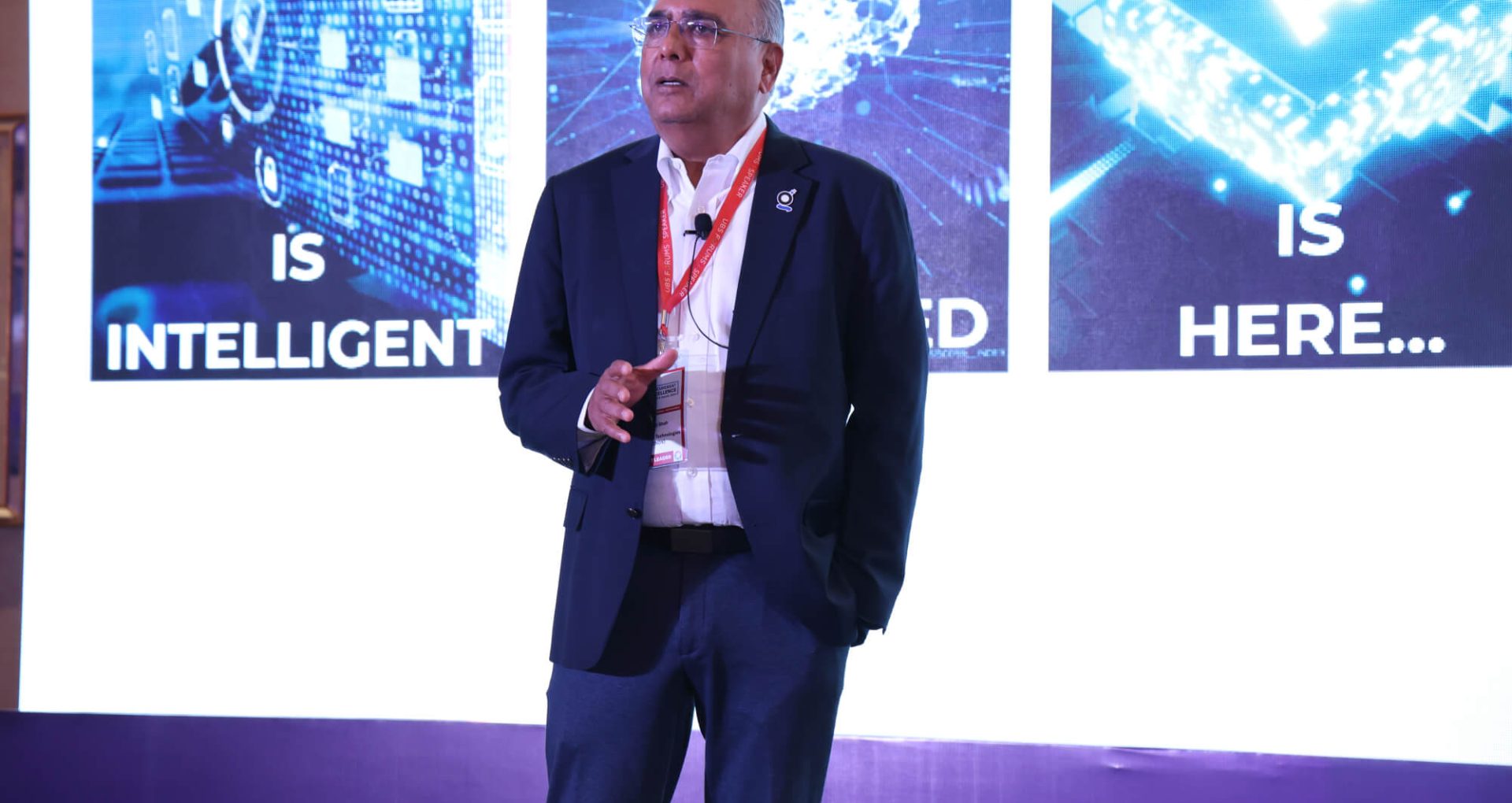
95% of AI Pilots Fail. Here’s What We Built Instead.” — Suhrid Shah at the 17th Procurement Excellence Summit
🎤 Speakers: Suhrid Shah, CEO & Karnik Dhabe, Assoc. Director – Product
A 27-minute presentation that started with a provocation, moved through a live AI demonstration, and ended with a standing room rethinking everything they assumed about AI in procurement.
When Suhrid Shah, CEO and Founder of MavenVista Technologies, took the stage at the 17th Edition of the Procurement Excellence Summit & Awards 2026 in Mumbai, he did not open with a product pitch.
He opened with a problem.
Two numbers. Projected on screen. No commentary needed.
The room — over 250 delegates from 170+ companies, comprising CPOs, VPs of Supply Chain, Heads of Procurement, and Finance leaders from India’s largest manufacturing enterprises — knew exactly what those numbers meant. They had lived them.
The failed chatbot integration. The analytics tool nobody opened after month two. The “AI-powered” dashboard that was really just a reporting layer with a new label.
Suhrid let the silence sit for a moment. Then he asked the question that framed the next 27 minutes:
“Why do these pilots fail? Because most organisations are trying to apply generic AI to a domain that demands specificity. Procurement is not a generic function. It is deeply contextual — to your industry, your categories, your vendor ecosystem, your negotiation patterns, your compliance requirements. Generic AI cannot understand that context. It can only pretend to.” — Suhrid Shah, CEO & Founder, MavenVista Technologies
The Argument: Generic AI Is the Problem, Not the Solution
With Karnik Dhabe, Associate Director – Product, running the live demonstration alongside, Suhrid built a clear and methodical case for why the industry’s approach to AI in procurement has been fundamentally flawed.
Clean Data: The Bedrock That Everyone Ignores
Before demonstrating a single AI capability, Suhrid made a point that drew visible nods across the room: AI is only as intelligent as the data it sits on.
He walked the audience through how VENDX — MavenVista’s Source-to-Pay platform — has been capturing, structuring, and cleaning procurement transaction data for its clients across 75+ enterprises for over two decades. This is not scraped data. This is not generic market data. This is real, verified, organisation-specific transaction data — purchase requisitions, RFQ negotiations, vendor responses, auction outcomes, delivery performance, invoice reconciliations — structured and normalised over years of actual procurement operations.
“You cannot build AI on dirty data and expect clean decisions. The foundation has to be right. We spent 25 years building that foundation — transaction by transaction, plant by plant, category by category. That is not something you can shortcut.” — Suhrid Shah
This was the pivot point of the talk. The audience understood: MavenVista was not claiming to have bolted AI onto a procurement tool. They had built AI on top of a data asset that has no parallel in the Indian procurement SaaS market.
The Live Demonstration: Six AI Avatars, Two RPAs, Zero Slides
Then the screen switched from slides to a live VENDX environment. Karnik Dhabe took over the controls. Suhrid narrated. And for the next fifteen minutes, the audience watched AI work — not in theory, but in practice.
One by one, each of the six VENDX Genie AI Avatars was demonstrated live:
Each avatar was shown performing its function on live procurement data — not a scripted walkthrough, but real queries answered in real time. The audience saw Genie Insight pull negotiation patterns for a specific vendor across three financial years. They saw Genie Discovery search the internet for qualified suppliers, verify GST credentials via government APIs, and initiate vendor qualification — in under a minute. They saw Genie Analytics build a custom dashboard from a natural language query and then explain the anomalies it detected.
They saw Genie Match reconcile a stack of invoices against purchase orders and goods receipts, flagging discrepancies before a human would have even opened the file.
And they saw Auto RFQ — the RPA that eliminates hours of manual work — automatically generate and float RFQs based on configurable rules, turning what used to be a purchase manager’s most tedious daily task into a zero-touch process.
Key Moments from the Presentation
- The Opening Provocation: “95% of AI pilots fail. If you are planning to add AI to your procurement, the odds are overwhelmingly against you — unless you change the approach entirely.”
- The Clean Data Argument: “Before you ask what AI can do for your procurement, ask: is your procurement data AI-ready? If not, that is where you start. Not with algorithms. With data discipline.”
- The Domain Depth Differentiator: “A general-purpose AI does not know the difference between negotiating freight rates and negotiating API pricing for a pharma company. We do. Because we have been doing this for 25 years.”
- The Human-AI Philosophy: “We did not build AI to replace the procurement professional. We built AI to give them back their time — so they can do what humans do best: build relationships, develop vendors, negotiate strategically, and make decisions.”
- The Live Demo Moment: Karnik queried Genie Insight for vendor negotiation behaviour on a specific commodity. The AI returned a three-year price trend, identified the vendor’s typical discount pattern, and recommended a negotiation strategy — all within seconds. The room went quiet. Then, applause.
The Three Pillars: Where AI Must Be Different
Suhrid distilled the MavenVista approach into three principles that he argued must guide any serious AI implementation in procurement:
Domain-Specific Intelligence
AI must be trained on procurement-specific data and workflows, not general-purpose models. The context of Indian manufacturing procurement — multi-plant operations, complex vendor ecosystems, regulatory requirements — demands specialised intelligence.
Workflow-Embedded Execution
AI that sits in a separate tab does not get adopted. AI must be inside the workflow — inside the RFQ process, inside the negotiation, inside the invoice match — so that using it is not an extra step but the natural way of working.
Human-Centric Decision Making
AI recommends. Humans decide. Every AI-assisted action in VENDX is logged, traceable, and auditable. The buyer remains in control. The AI makes them more informed, not more automated.
Watch the Full Presentation
The complete 27-minute presentation by Suhrid Shah and Karnik Dhabe — including the live demonstration of all six VENDX Genie AI Avatars and two RPAs — is available below.
Full Presentation: “Why 95% of AI Pilots Fail — And What We Built Instead” | Suhrid Shah & Karnik Dhabe | 17th Procurement Excellence Summit & Awards 2026, Mumbai
The Response
The presentation drew one of the strongest audience responses of the summit. Procurement leaders who had spent years evaluating AI tools — and in many cases, watching those evaluations produce nothing — finally saw something that matched their operational reality.
Not a concept. Not a roadmap. A working system.
Following the talk, over 70 companies visited the MavenVista booth to experience the AI Avatars firsthand on a 43-inch touchscreen — interacting directly with VENDX Genie, querying live data, and seeing the AI respond to their own procurement questions in real time.
Later that evening, MavenVista was honoured with the Best AI-Powered Procurement Intelligence Platform award at the summit — a recognition not just of technology, but of an approach that the industry is ready for.
AI does not fail because of AI.
It fails because of the wrong approach.